
Central India Birding Tour
Central India Birding Tour
Duration: 11 Nights / 12 Days
Places Covered: Delhi - Sultanpur - Delhi - Agra - Fatehpur Sikri - Bharatpur - Agra - Bandhavgarh - Kanha - Jabalpur - Delhi
 Day
1: Arive Delhi
Day
1: Arive Delhi
Early morning arrive Delhi. On arrival meeting and transfer to hotel. Afternoon
sightseeing tour of Old and New Delhi visiting the Red Fort, Qutub Minar Jantar
Mantar etc.
Day 2 : Delhi - Sultanpur - Delhi
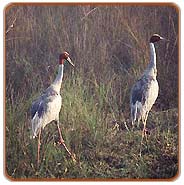
Drive to Sultanpur Jheel 50 Kms away rich in waterfowls and common cranes.
Day 3 : Delhi - Agra - Fatehpur Sikri - Bharatpur
Drive to Agra , visit the Taj Mahal and later drive through the deserted Mughal
city of Fatehpur Sikri to Keoladeo Ghana bird sanctuary at Bharatpur .
Day 4 : Bharatpur
Bird watching walks , boat ride through the marshes (water level permitting
).
Day 5 : Bharatpur - Agra
Proceed for the early morning RICKSHAW RIDE at the Bird Park. Breakfast will
be at hotel. Enjoy the second round of BIRDING IN BHARATPUR. Proceed to Agra
in the evening. AGRA: Two great Mughal monarchs, Akbar and Shah Jahan, transformed
the little village of Agra into a befitting second capital of the Mughal Empire
- giving it the name Dar-ul-Khilafat {seat of the Emperor}. 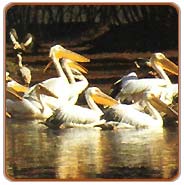 Today
a visitor to Agra is caught up in a world of contrasting edifices, of red sandstone
and white marble, narrow galleys and quaint buggies, and that irresistible charm
that this favorite city of the Mughals still retains. It is not surprising,
that modern Agra still reflects its Mughal heritage most conspicuously. A walk
down the narrow bustling streets of the city will introduce the visitor to the
wafting aroma of Mughlai cuisine. Reach Agra. Check in at hotel. Overnight will
be at Agra.
Today
a visitor to Agra is caught up in a world of contrasting edifices, of red sandstone
and white marble, narrow galleys and quaint buggies, and that irresistible charm
that this favorite city of the Mughals still retains. It is not surprising,
that modern Agra still reflects its Mughal heritage most conspicuously. A walk
down the narrow bustling streets of the city will introduce the visitor to the
wafting aroma of Mughlai cuisine. Reach Agra. Check in at hotel. Overnight will
be at Agra.
Day 6 : Agra - Umaria (Bandhavgarh)
Proceed to visit Taj after breakfast. Enjoy battery van ride to the Taj. TAJ
MAHAL: Little needs to be said about this architectural wonder which is always
the soul raison-de-etre for every tourist's visit to Agra. Built by Shah Jahan,
the Taj is a white marble memorial to his beautiful wife Mumtaz Mahal. This
monument took 22 years to be completed and was designed, and planned by Persian
architect Ustad Isa. Apart from its stunning design balance and perfect symmetry,
the Taj is also noted particularly for its elegant domes, intricately carved
screens and some of the best inlay work ever seen. Proceed for sight-seeing
to the AGRA FORT - Built by the famed Mughal emperor Akbar in 1565 AD, the fort
is predominantly of red sandstone. Ensconced within is the picture perfect Pearl
Mosque, which is a major tourist attraction. Visit Itmadullah's Tomb built by
Empress NOOR JEHAN in memory of her father (The interiors of which are considered
better than the Taj). 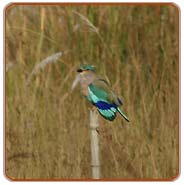 Proceed
to station for train to UMARIA. Overnight will be on train.
Proceed
to station for train to UMARIA. Overnight will be on train.
Day 7 : Arrive at Bandhavgarh
Reach UMARIA and transfer to Bandhavgarh. Reach and enjoy breakfast. Bandhavgarh
is a new National Park with a very long history. Set among the Vindhya hills
of Madhya Pradesh with an area of 168sq miles (437sq km) it contains a wide
variety of habitats and a high density of game, including a large number of
Tigers. This is also the White tiger country. These have been found in the old
state of Rewa for Many years. Maharaja Martand Singh captured the last known
in 1951. This white Tiger, Mohun is now stuffed and on display in the Palace
of Maharaja of Rewa. Prior to becoming a National Park, the forests around Bandhavgarh
had long been maintained as a Shikargah, or game preserve of the Maharaja of
Rewa. The Maharaja and his guests carried out hunting - otherwise the wildlife
was well protected. It was considered a good omen for Maharaja of Rewa to shoot
109 tigers. His Highness Maharaja Venkat Raman Singh shot 111 Tigers by 1914.
Where birds are concerned, keep a look out for white browed fantails, steppe
eagles, green pigeons, grey malabar hornbills, black and white malabar hornbills
(quite a rare sighting), blossom headed parakeets, parakeets, blue bearded bee
eaters, green bee eaters, white bellied drongos, owls, Jerdon's and gold fronted
leaf birds, minivets, woodshrikes and the lovely paradise flycatchers. Enjoy
a full day of birding inside the jungle. (Two safaris).
 Day
8 : Bandhavgarh
Day
8 : Bandhavgarh
Enjoy birding inside the jungle and on the periphery. (Two safaris) Trip to
the Bandhavgarh Fort: The oldest fort in India - considered to be more than
2500 years. One-hour trek up the fort is worth the effort. The charm of this
trek lies in discovering these monuments in the jungle, unspoiled and unexplored.
Some of the statues lie off the main path and so it is best to take a guide.
Apart from the avatars, well worth seeing are three small temples of around
the 12th century. These temples are deserted but the fort is still used as a
place of worship. Kabir Das, the celebrated 16th century saint, once lived and
preached here. The natural ramparts of the fort give breathtaking view of the
surrounding countryside. The fort still belongs to the Maharaja of Rewa and
permission is required to visit it. However permission is available locally
and no trip to Bandhavgarh is complete without making an effort to climb up
the fort. The staff of the resort carries your lunch while you are busy negotiating
the trek to the fort. Overnight will be at the resort.
Day 9 : Bandhavgarh - Kanha
After breakfast drive to Kanha. This is the place that has been described by
RUDYARD KIPLING in his great book "The Jungle Book". Located in the
Mandla district of Madhya Pradesh, Kanha National Park is a tiger reserve that
extends over an area of over 940 square km.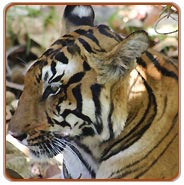 A horseshoe shaped valley bounded by the spurs of the Mekal presents an interesting
topography. Steep rocky escarpments along the edges offer breathtaking views
of the valley.Realizing the danger on the Tiger population in the country, the
Government started the "Project Tiger" at Kanha and in 1974 the area
was declared a Tiger reserve. The park is also the habitat of the high ground
Barasingha. In 1930s, the Kanha area was divided into two sanctuaries - Hallon
and Banjar of 250kms to 300kms each. Though one of these was subsequently disbanded
.The area remained a protected one until 1947. Depletion of the tiger population
in the year that followed led to the area being made an absolute sanctuary in
1952. Patient watching should reward the visitor, with a sight of Indian Fox,
Sloth bear, Striped hyena, Jungle cut, Leopard, Mouse Deer, Chausingha or four
horned antelope, Nilgai, Ratel and Porcupine Kanha has some 200 species of birds.
Watchers should station themselves in the hills, where the mixed and bamboo
forests harbour many species and in the grassy forest clearings. Water birds
can be seen near the park's many rivulets and at Sarvantal, a pool that is frequented
by water birds and the area in front of the museum. The birds comprise of Racket
Tailed Drongo, Crested Hawk Eagle, Crested Serpent Eagle, Peacock, Golden Oriole,
Treepie, Whitenecked Stork, Shikra, White-eyed Buzzard, Roseringed Parakeet,
Shama, Red Munia, Large Green Barbet, Crimson Breasted Barbet, Lesser Golden
Backed Woodpecker, Hair Crested Drongo, Common Teal, Pintail Duck, etc. Reach
in the afternoon and relax at the resort. Overnight will be at the resort.
A horseshoe shaped valley bounded by the spurs of the Mekal presents an interesting
topography. Steep rocky escarpments along the edges offer breathtaking views
of the valley.Realizing the danger on the Tiger population in the country, the
Government started the "Project Tiger" at Kanha and in 1974 the area
was declared a Tiger reserve. The park is also the habitat of the high ground
Barasingha. In 1930s, the Kanha area was divided into two sanctuaries - Hallon
and Banjar of 250kms to 300kms each. Though one of these was subsequently disbanded
.The area remained a protected one until 1947. Depletion of the tiger population
in the year that followed led to the area being made an absolute sanctuary in
1952. Patient watching should reward the visitor, with a sight of Indian Fox,
Sloth bear, Striped hyena, Jungle cut, Leopard, Mouse Deer, Chausingha or four
horned antelope, Nilgai, Ratel and Porcupine Kanha has some 200 species of birds.
Watchers should station themselves in the hills, where the mixed and bamboo
forests harbour many species and in the grassy forest clearings. Water birds
can be seen near the park's many rivulets and at Sarvantal, a pool that is frequented
by water birds and the area in front of the museum. The birds comprise of Racket
Tailed Drongo, Crested Hawk Eagle, Crested Serpent Eagle, Peacock, Golden Oriole,
Treepie, Whitenecked Stork, Shikra, White-eyed Buzzard, Roseringed Parakeet,
Shama, Red Munia, Large Green Barbet, Crimson Breasted Barbet, Lesser Golden
Backed Woodpecker, Hair Crested Drongo, Common Teal, Pintail Duck, etc. Reach
in the afternoon and relax at the resort. Overnight will be at the resort.
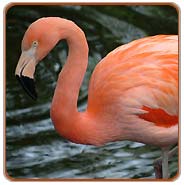
Day 10 : Kanha
Enjoy a full day game viewing inside the jungle. (Two safaris) There would be
a lot of birding today as we would take roads around the forest to places not
frequented by people and in the bushes. Overnight will be at the resort.
Day 11 : Kanha - Jabalpur - Delhi
Proceed for the morning safari and birding into forest. Proceed to JABALPUR
after lunch. Reach and board overnight train to Delhi.
Day 12 : Delhi
Reach and check into hotel for the day. Visit to SULTANPUR BIRD SANCTUARY for
some afternoon birding with packed lunch. Return to Delhi in the evening and
after a FAREWELL DINNER proceed to the airport in time for flight home.